
Microbes at the Gas Pump
(单词翻译:单击)
Many vehicles run on fuels made of a blend of gasoline and ethanol. Experts at the U.S. Department of Energy say that using more ethanol would help reduce our dependence5 on fossil fuels.
 |
|
Cars such as this one can run on a fuel called E85, which is 85 percent ethanol and 15 percent gasoline. |
|
National Renewable Energy Laboratory |
To produce enough ethanol to meet our energy needs, researchers are developing methods to turn plant parts into ethanol. They're members of a growing movement to use renewable resources, such as plants, to provide energy.
"There's leftover6 plant material everywhere," says Jared Leadbetter. "There are rice hulls7, sawdust, wood chips—plant material that's full of energy." Leadbetter is a microbiologist at the California Institute of Technology in Pasadena.
To tap this energy supply, scientists and engineers are turning to microbes to convert huge amounts of waste plant material into ethanol for cars.
Breaking down sugars
When tiny organisms such as yeast8 break down sugars to obtain energy, they produce ethanol. This process is called fermentation.
Scientists and engineers have been using fermentation for years to make ethanol from kernels10 of corn. But there's a lot more to a corn plant than just the kernel9. Corn plants include stalks, leaves, and the cob that's left behind after the kernels are removed.
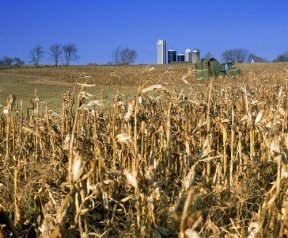 |
|
Microbes could help turn cornstalks and other waste plant material into a biofuel. |
|
National Renewable Energy Laboratory |
The trouble is that stalks, leaves, and other plant parts contain a complex molecule11 called cellulose. It's a tough molecule to break down. In fact, our bodies can't even digest it.
But breaking down cellulose into sugar molecules12 is a key step in making ethanol from the nearly 430 million tons of plant waste produced on farmland every year.
Fortunately, some organisms make compounds called enzymes13 that can digest, or break down, cellulose. Scientists hope to use such enzymes to produce ethanol.
Termite stomachs
Scientists are looking for these cellulose-busting enzymes in unusual places—termite stomachs, for example.
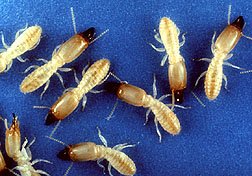
Most people think of termites14 as pests because of the damage that they do to homes and other structures. But termites harbor more than 100 species of bacteria in their guts—bacteria that may help us make ethanol from plant waste.
 |
|
The stomachs of termites contain bacteria that can break down cellulose. |
|
Agricultural Research Service, U.S. Department of Agriculture |
These microbes digest cellulose and other complex molecules in wood. Without their bacteria, termites wouldn't be able to survive on their woody diet.
Leadbetter and his coworkers at the U.S. Department of Energy's Joint15 Genome Institute are studying the genes16 of microbes that produce wood-digesting enzymes. Made up of molecules called DNA17, genes determine such traits as the shape of a plant leaf, the color of an animal's coat, or the texture18 of a person's hair.
"We are making a toolbox of wood-degrading enzymes and we want to tap it to obtain enzymes for making ethanol," Leadbetter says.
Once they find the genes that control the enzymes that digest wood and those that produce ethanol, Leadbetter and his team hope to genetically19 modify bacteria to do both steps.
Cow stomachs
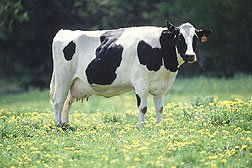
The dark depths of a cow's stomach are home to cellulose-munching microbes as well, says Paul Weimer. He's a research scientist with the U.S. Department of Agriculture Dairy Forage20 Center in Madison, Wis.
 |
|
A cow's stomach is home to cellulose-munching microbes. |
|
Agricultural Research Service, U.S. Department of Agriculture |
"Cows are natural processors," Weimer says. "They make their living by eating plants, and bacteria carry out their fiber21 digestion22."
Weimer says that the bacteria in a cow's stomach produce many different enzymes that break down the cellulose in grass and other plants in a cow's diet.
These bacteria hold cellulose-digesting enzymes on their cell surfaces in a structure called a cellulosome. What's more, the bacteria attach themselves to cellulose fibers23 in the cow's stomach and digest them on the spot.
"The bacteria basically glue themselves to the fiber and begin digesting it," Weimer says. "It works like a disassembly line that takes apart the cell wall."
Right now, making ethanol from cellulose is expensive. Enzymes are costly24 to make, and current methods for breaking down cellulose require a lot of energy.
"If we could re-create the activity of the cellulosome," Weimer says, "we could greatly increase the efficiency and improve the economics of digesting cellulose."
Increasing production
Another common wood digester is a fungus25 called Trichoderma reesei. By producing cellulose-digesting enzymes, this fungus breaks down logs in the forest and causes "jungle rot," which ruins tents and other fabrics26 in the tropics.
|
This racing vehicle runs on ethanol. |
|
National Renewable Energy Laboratory |
At least one company has developed strains of this fungus that can churn out huge quantities of enzymes.
Advances in ethanol production can't come soon enough. Last year, President Bush signed a law requiring 7.5 billion gallons of biofuels such as ethanol to be blended with gasoline by 2012. That's almost twice the amount of ethanol that we produce from corn today.
Maybe, by the time you get your driver's license28, you'll be fueling up at the ethanol pump.
 收听单词发音
 |
1
weirdest
|
|
| 怪诞的( weird的最高级 ); 神秘而可怕的; 超然的; 古怪的 | |
参考例句: |
|
|
|
|
2
termite
|
|
| n.白蚁 | |
参考例句: |
|
|
|
|
3
guts
|
|
| v.狼吞虎咽,贪婪地吃,飞碟游戏(比赛双方每组5人,相距15码,互相掷接飞碟);毁坏(建筑物等)的内部( gut的第三人称单数 );取出…的内脏n.勇气( gut的名词复数 );内脏;消化道的下段;肠 | |
参考例句: |
|
|
|
|
4
fungi
|
|
| n.真菌,霉菌 | |
参考例句: |
|
|
|
|
5
dependence
|
|
| n.依靠,依赖;信任,信赖;隶属 | |
参考例句: |
|
|
|
|
6
leftover
|
|
| n.剩货,残留物,剩饭;adj.残余的 | |
参考例句: |
|
|
|
|
7
hulls
|
|
| 船体( hull的名词复数 ); 船身; 外壳; 豆荚 | |
参考例句: |
|
|
|
|
8
yeast
|
|
| n.酵母;酵母片;泡沫;v.发酵;起泡沫 | |
参考例句: |
|
|
|
|
9
kernel
|
|
| n.(果实的)核,仁;(问题)的中心,核心 | |
参考例句: |
|
|
|
|
10
kernels
|
|
| 谷粒( kernel的名词复数 ); 仁; 核; 要点 | |
参考例句: |
|
|
|
|
11
molecule
|
|
| n.分子,克分子 | |
参考例句: |
|
|
|
|
12
molecules
|
|
| 分子( molecule的名词复数 ) | |
参考例句: |
|
|
|
|
13
enzymes
|
|
| n. 酶,酵素 | |
参考例句: |
|
|
|
|
14
termites
|
|
| n.白蚁( termite的名词复数 ) | |
参考例句: |
|
|
|
|
15
joint
|
|
| adj.联合的,共同的;n.关节,接合处;v.连接,贴合 | |
参考例句: |
|
|
|
|
16
genes
|
|
| n.基因( gene的名词复数 ) | |
参考例句: |
|
|
|
|
17
DNA
|
|
| (缩)deoxyribonucleic acid 脱氧核糖核酸 | |
参考例句: |
|
|
|
|
18
texture
|
|
| n.(织物)质地;(材料)构造;结构;肌理 | |
参考例句: |
|
|
|
|
19
genetically
|
|
| adv.遗传上 | |
参考例句: |
|
|
|
|
20
forage
|
|
| n.(牛马的)饲料,粮草;v.搜寻,翻寻 | |
参考例句: |
|
|
|
|
21
fiber
|
|
| n.纤维,纤维质 | |
参考例句: |
|
|
|
|
22
digestion
|
|
| n.消化,吸收 | |
参考例句: |
|
|
|
|
23
fibers
|
|
| 光纤( fiber的名词复数 ); (织物的)质地; 纤维,纤维物质 | |
参考例句: |
|
|
|
|
24
costly
|
|
| adj.昂贵的,价值高的,豪华的 | |
参考例句: |
|
|
|
|
25
fungus
|
|
| n.真菌,真菌类植物 | |
参考例句: |
|
|
|
|
26
fabrics
|
|
| 织物( fabric的名词复数 ); 布; 构造; (建筑物的)结构(如墙、地面、屋顶):质地 | |
参考例句: |
|
|
|
|
27
racing
|
|
| n.竞赛,赛马;adj.竞赛用的,赛马用的 | |
参考例句: |
|
|
|
|
28
license
|
|
| n.执照,许可证,特许;v.许可,特许 | |
参考例句: |
|
|
|


