
Abraham Lincoln - The Gettysburg Address (1863)
(单词翻译:单击)
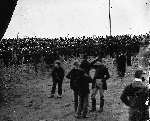
Photo: President Lincoln among the crowd at Gettysburg.
The Battle of Gettysburg occurred over three hot summer days, July 1 to July 3, 1863, around the small market town of Gettysburg, Pennsylvania. It began as a skirmish but by its end involved 160,000 Americans and effectively decided1 the fate of the Union.
On November 19, 1863, President Lincoln went to the Battlefield to dedicate it as a national cemetery2. The main orator3, Edward Everett of Massachusetts, delivered a two hour formal address. The president then had his turn. He spoke4 in his high, penetrating5 voice, and in a little over two minutes delivered this speech, surprising many in the audience by its shortness and leaving many others quite unimpressed.
Over time, however, his speech with its ending words - government of the People, by the People, for the People - have come to symbolize6 the definition of democracy itself.

The Gettysburg Address
Four score and seven years ago our fathers brought forth7 on this continent, a new nation, conceived in liberty, and dedicated8 to the proposition that all men are created equal.
Now we are engaged in a great civil war, testing whether that nation, or any nation so conceived and so dedicated, can long endure. We are met on a great battlefield of that war. We have come to dedicate a portion of that field, as a final resting place for those who here gave their lives that that nation might live. It is altogether fitting and proper that we should do this.
But in a larger sense, we cannot dedicate - we cannot consecrate9 - we cannot hallow - this ground. The brave men, living and dead, who struggled here, have consecrated10 it, far above our poor power to add or detract. The world will little note, nor long remember, what we say here, but it can never forget what they did here. It is for us the living, rather, to be dedicated here to the unfinished work which they who fought here have thus far so nobly advanced. It is rather for us to be here dedicated to the great task remaining before us - that from these honored dead we take increased devotion to that cause for which they gave the last full measure of devotion - that we here highly resolve that these dead shall not have died in vain - that this nation, under God, shall have a new birth of freedom - and that government of the people, by the people, for the people, shall not perish from the earth.
Abraham Lincoln - November 19, 1863
 收听单词发音
 |
1
decided
|
|
| adj.决定了的,坚决的;明显的,明确的 | |
参考例句: |
|
|
|
|
2
cemetery
|
|
| n.坟墓,墓地,坟场 | |
参考例句: |
|
|
|
|
3
orator
|
|
| n.演说者,演讲者,雄辩家 | |
参考例句: |
|
|
|
|
4
spoke
|
|
| n.(车轮的)辐条;轮辐;破坏某人的计划;阻挠某人的行动 v.讲,谈(speak的过去式);说;演说;从某种观点来说 | |
参考例句: |
|
|
|
|
5
penetrating
|
|
| adj.(声音)响亮的,尖锐的adj.(气味)刺激的adj.(思想)敏锐的,有洞察力的 | |
参考例句: |
|
|
|
|
6
symbolize
|
|
| vt.作为...的象征,用符号代表 | |
参考例句: |
|
|
|
|
7
forth
|
|
| adv.向前;向外,往外 | |
参考例句: |
|
|
|
|
8
dedicated
|
|
| adj.一心一意的;献身的;热诚的 | |
参考例句: |
|
|
|
|
9
consecrate
|
|
| v.使圣化,奉…为神圣;尊崇;奉献 | |
参考例句: |
|
|
|
|
10
consecrated
|
|
| adj.神圣的,被视为神圣的v.把…奉为神圣,给…祝圣( consecrate的过去式和过去分词 );奉献 | |
参考例句: |
|
|
|
- 上一篇:Edward M. Kennedy - Tribute to John F. Kennedy Jr. (1999)
- 下一篇:Nelson Mandela - "I am Prepared to Die" (1964)


