
Franklin D. Roosevelt - Third Inaugural Address (1941)
(单词翻译:单击)
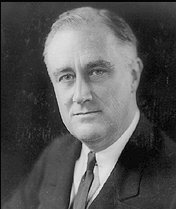
This speech was delivered at a time when the military forces of Germany and Japan enjoyed a series of victories over seemingly weakling democratic nations. By early 1941, the German Reich had spread throughout most of Western Europe, while the Japanese Empire covered vast areas of the South Pacific.
The shocking collapse1 of noble, civilized2 nations resulted in a creeping erosion of confidence in the future of democracy. To some observers it appeared that Fascism and militarism might be the wave of the future and that democracy with all its inherent problems was in serious decline.
In his third inaugural3 speech, President Franklin Roosevelt turned his attention to this growing misconception and attempted to rally Americans, reminding them of their roots and rekindling4 the spirit of democracy.
Mr. Chief Justice, my friends:
On each national day of inauguration5 since 1789, the people have renewed their sense of dedication6 to the United States.
In Washington's day the task of the people was to create and weld together a nation.
In Lincoln's day the task of the people was to preserve that Nation from disruption from within.
In this day the task of the people is to save that Nation and its institutions from disruption from without.
To us there has come a time, in the midst of swift happenings, to pause for a moment and take stock--to recall what our place in history has been, and to rediscover what we are and what we may be. If we do not, we risk the real peril7 of isolation8, the real peril of inaction.
Lives of nations are determined9 not by the count of years, but by the lifetime of the human spirit. The life of a man is three-score years and ten: a little more, a little less. The life of a nation is the fullness of the measure of its will to live.
There are men who doubt this. There are men who believe that democracy, as a form of Government and a frame of life, is limited or measured by a kind of mystical and artificial fate that, for some unexplained reason, tyranny and slavery have become the surging wave of the future--and that freedom is an ebbing10 tide.
But we Americans know that this is not true.
Eight years ago, when the life of this Republic seemed frozen by a fatalistic terror, we proved that this is not true. We were in the midst of shock--but we acted. We acted quickly, boldly, decisively.
These later years have been living years--fruitful years for the people of this democracy. For they have brought to us greater security and, I hope, a better understanding that life's ideals are to be measured in other than material things.
Most vital to our present and to our future is this experience of a democracy which successfully survived crisis at home; put away many evil things; built new structures on enduring lines; and, through it all, maintained the fact of its democracy.
For action has been taken within the three-way framework of the Constitution of the United States. The coordinate11 branches of the Government continue freely to function. The Bill of Rights remains12 inviolate13. The freedom of elections is wholly maintained. Prophets of the downfall of American democracy have seen their dire14 predictions come to naught15.
No, democracy is not dying.
We know it because we have seen it revive--and grow.
We know it cannot die--because it is built on the unhampered initiative of individual men and women joined together in a common enterprise--an enterprise undertaken and carried through by the free expression of a free majority.
We know it because democracy alone, of all forms of government, enlists16 the full force of men's enlightened will.
We know it because democracy alone has constructed an unlimited17 civilization capable of infinite progress in the improvement of human life.
We know it because, if we look below the surface, we sense it still spreading on every continent--for it is the most humane18, the most advanced, and in the end the most unconquerable of all forms of human society.
A nation, like a person, has a body--a body that must be fed and clothed and housed, invigorated and rested, in a manner that measures up to the standards of our time.
A nation, like a person, has a mind--a mind that must be kept informed and alert, that must know itself, that understands the hopes and the needs of its neighbors--all the other nations that live within the narrowing circle of the world.
And a nation, like a person, has something deeper, something more permanent, something larger than the sum of all its parts. It is that something which matters most to its future--which calls forth19 the most sacred guarding of its present.
It is a thing for which we find it difficult--even impossible--to hit upon a single, simple word.
And yet we all understand what it is--the spirit--the faith of America. It is the product of centuries. It was born in the multitudes of those who came from many lands--some of high degree, but mostly plain people, who sought here, early and late, to find freedom more freely.
The democratic aspiration20 is no mere21 recent phase in human history. It is human history. It permeated22 the ancient life of early peoples. It blazed anew in the middle ages. It was written in Magna Carta.
In the Americas its impact has been irresistible23. America has been the New World in all tongues, to all peoples, not because this continent was a new-found land, but because all those who came here believed they could create upon this continent a new life--a life that should be new in freedom.
Its vitality24 was written into our Mayflower Compact, into the Declaration of Independence, into the Constitution of the United States, into the Gettysburg Address.
Those who first came here to carry out the longings25 of their spirit, and the millions who followed, and the stock that sprang from them--all have moved forward constantly and consistently toward an ideal which in itself has gained stature26 and clarity with each generation.
The hopes of the Republic cannot forever tolerate either undeserved poverty or self-serving wealth.
We know that we still have far to go; that we must more greatly build the security and the opportunity and the knowledge of every citizen, in the measure justified27 by the resources and the capacity of the land.
But it is not enough to achieve these purposes alone. It is not enough to clothe and feed the body of this Nation, to instruct to inform its mind. For there is also the spirit. And of the three, the greatest is the spirit.
Without the body and the mind, as all men know, the Nation could not live.
But if the spirit of America were killed, even though the Nation's body and mind, constricted28 in an alien world, lived on, the America we know would have perished.
That spirit--that faith--speaks to us in our daily lives in ways often unnoticed, because they seem so obvious. It speaks to us here in the Capital of the Nation. It speaks to us through the processes of governing in the sovereignties of 48 States. It speaks to us in our counties, in our cities, in our towns, and in our villages. It speaks to us from the other nations of the hemisphere, and from those across the seas--the enslaved, as well as the free. Sometimes we fail to hear or heed29 these voices of freedom because to us the privilege of our freedom is such an old, old story.
The destiny of America was proclaimed in words of prophecy spoken by our first President in his first inaugural in 1789--words almost directed, it would seem, to this year of 1941: "The preservation30 of the sacred fire of liberty and the destiny of the republican model of government are justly considered ... deeply, ... finally, staked on the experiment intrusted to the hands of the American people."
If you and I, if we in this later day, lose that sacred fire--if we let it be smothered31 with doubt and fear--then we shall reject the destiny which Washington strove so valiantly32 and so triumphantly33 to establish. The preservation of the spirit and faith of the Nation does, and will, furnish the highest justification34 for every sacrifice that we may make in the cause of national defense35.
In the face of great perils36 never before encountered, our strong purpose is to protect and to perpetuate37 the integrity of democracy.
For this we muster38 the spirit of America, and the faith of America.
We do not retreat. We are not content to stand still. As Americans, we go forward, in the service of our country, by the will of God.
Franklin D. Roosevelt - January 20, 1941
 收听单词发音
 |
1
collapse
|
|
| vi.累倒;昏倒;倒塌;塌陷 | |
参考例句: |
|
|
|
|
2
civilized
|
|
| a.有教养的,文雅的 | |
参考例句: |
|
|
|
|
3
inaugural
|
|
| adj.就职的;n.就职典礼 | |
参考例句: |
|
|
|
|
4
rekindling
|
|
| v.使再燃( rekindle的现在分词 ) | |
参考例句: |
|
|
|
|
5
inauguration
|
|
| n.开幕、就职典礼 | |
参考例句: |
|
|
|
|
6
dedication
|
|
| n.奉献,献身,致力,题献,献辞 | |
参考例句: |
|
|
|
|
7
peril
|
|
| n.(严重的)危险;危险的事物 | |
参考例句: |
|
|
|
|
8
isolation
|
|
| n.隔离,孤立,分解,分离 | |
参考例句: |
|
|
|
|
9
determined
|
|
| adj.坚定的;有决心的 | |
参考例句: |
|
|
|
|
10
ebbing
|
|
| (指潮水)退( ebb的现在分词 ); 落; 减少; 衰落 | |
参考例句: |
|
|
|
|
11
coordinate
|
|
| adj.同等的,协调的;n.同等者;vt.协作,协调 | |
参考例句: |
|
|
|
|
12
remains
|
|
| n.剩余物,残留物;遗体,遗迹 | |
参考例句: |
|
|
|
|
13
inviolate
|
|
| adj.未亵渎的,未受侵犯的 | |
参考例句: |
|
|
|
|
14
dire
|
|
| adj.可怕的,悲惨的,阴惨的,极端的 | |
参考例句: |
|
|
|
|
15
naught
|
|
| n.无,零 [=nought] | |
参考例句: |
|
|
|
|
16
enlists
|
|
| v.(使)入伍, (使)参军( enlist的第三人称单数 );获得(帮助或支持) | |
参考例句: |
|
|
|
|
17
unlimited
|
|
| adj.无限的,不受控制的,无条件的 | |
参考例句: |
|
|
|
|
18
humane
|
|
| adj.人道的,富有同情心的 | |
参考例句: |
|
|
|
|
19
forth
|
|
| adv.向前;向外,往外 | |
参考例句: |
|
|
|
|
20
aspiration
|
|
| n.志向,志趣抱负;渴望;(语)送气音;吸出 | |
参考例句: |
|
|
|
|
21
mere
|
|
| adj.纯粹的;仅仅,只不过 | |
参考例句: |
|
|
|
|
22
permeated
|
|
| 弥漫( permeate的过去式和过去分词 ); 遍布; 渗入; 渗透 | |
参考例句: |
|
|
|
|
23
irresistible
|
|
| adj.非常诱人的,无法拒绝的,无法抗拒的 | |
参考例句: |
|
|
|
|
24
vitality
|
|
| n.活力,生命力,效力 | |
参考例句: |
|
|
|
|
25
longings
|
|
| 渴望,盼望( longing的名词复数 ) | |
参考例句: |
|
|
|
|
26
stature
|
|
| n.(高度)水平,(高度)境界,身高,身材 | |
参考例句: |
|
|
|
|
27
justified
|
|
| a.正当的,有理的 | |
参考例句: |
|
|
|
|
28
constricted
|
|
| adj.抑制的,约束的 | |
参考例句: |
|
|
|
|
29
heed
|
|
| v.注意,留意;n.注意,留心 | |
参考例句: |
|
|
|
|
30
preservation
|
|
| n.保护,维护,保存,保留,保持 | |
参考例句: |
|
|
|
|
31
smothered
|
|
| (使)窒息, (使)透不过气( smother的过去式和过去分词 ); 覆盖; 忍住; 抑制 | |
参考例句: |
|
|
|
|
32
valiantly
|
|
| adv.勇敢地,英勇地;雄赳赳 | |
参考例句: |
|
|
|
|
33
triumphantly
|
|
| ad.得意洋洋地;得胜地;成功地 | |
参考例句: |
|
|
|
|
34
justification
|
|
| n.正当的理由;辩解的理由 | |
参考例句: |
|
|
|
|
35
defense
|
|
| n.防御,保卫;[pl.]防务工事;辩护,答辩 | |
参考例句: |
|
|
|
|
36
perils
|
|
| 极大危险( peril的名词复数 ); 危险的事(或环境) | |
参考例句: |
|
|
|
|
37
perpetuate
|
|
| v.使永存,使永记不忘 | |
参考例句: |
|
|
|
|
38
muster
|
|
| v.集合,收集,鼓起,激起;n.集合,检阅,集合人员,点名册 | |
参考例句: |
|
|
|
- 上一篇:Franklin D. Roosevelt - First Inaugural Address (1933)
- 下一篇:Franklin D. Roosevelt - For a Declaration of War (1941)


