
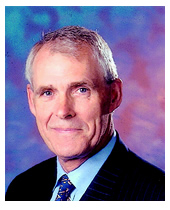
十五年的渴望(香港上海汇丰银行主席艾尔敦先生-中国与WTO)
(单词翻译:单击)
|
|||
| Mr David Eldon: Good morning Ladies and Gentlemen, I stand before you today with a confession3 to make. It relates to something that I did recently. Exactly one month ago, I delivered a speech to another American audience. It was a gathering4 of the American Chamber5 of Commerce in Hong Kong. I talked about Hong Kong's changing role. And about how Hong Kong can compete as it becomes increasingly easier for foreign companies to do business in China. On that day in March, I made several suggestions. One of which was that when travelling overseas, government officials and business people from Hong Kong should spend more time selling Hong Kong to the sceptics. And less time speaking to the converted. Consequently I am here today, in front of a decidedly Hong Kong-friendly crowd, in direct violation6 of my own advice. That said, I plan to redeem7 myself by not devoting too much time talking about Hong Kong - a topic that is well known to this audience. Rather I intend to concentrate on the less known. In particular, the implications of China's entry into the WTO. The implications for Hong Kong and the implications for foreign companies. In doing so, I am going to focus my talk on three distinct areas of knowledge: what we know we know; Common knowledge To overseas manufacturing firms or trading companies it is "the land of a billion buyers of shoes, cars and computers." To foreign companies already in China it is a place that warrants expansion. In fact, a recent survey found that nine out every 10 foreign companies operating in China plan to expand their investment in the next three years. To foreign financial institutions - particularly those interested in the provision of wealth management services - China is a market with enormous potential. After all it is a country with the highest rate of savings8 in the world. A country where reportedly more than 80 per cent of the bank deposits are held in 20 per cent of the accounts. To my Bank it is our birthplace. To your President it is a 'strategic competitor.' Another thing we know we know and this audience in particular knows is that China's entry into the WTO means the role of Hong Kong will inevitably9 change. Hong Kong was once the only gateway10 to the Mainland market. A vital link between East and West. Between developed and less-developed nations. Between capitalist and reforming economies. Between China and everywhere else. Today, Hong Kong no longer holds this privileged position. The reality is that Hong Kong hasn't held it for quite some time. Long before the ink was dry on China's WTO agreement, companies were choosing to bypass Hong Kong and go directly to Beijing, Shanghai and elsewhere in the Mainland. Of course, a significant number of companies were also still coming to Hong Kong to take advantage of the city's close geographic11, economic, political and cultural ties to the Mainland. And as you are aware they continue to come. We also know that China is in the midst of two transitions at one time: from a command to a market economy and from a rural to an urban society. And we know that the country faces a number of challenges: allocating12 incoming capital effectively; reforming state-owned enterprises; creating more jobs; spreading wealth more evenly; reducing bureaucracy; and eliminating corruption13. And now, living up to the commitments and the expectations of WTO membership can be added to this list. Finally, we know that China has changed a great deal in a relatively14 short period of time. Thirty years ago US President Richard Nixon and his national security adviser15 Henry Kissinger made a historic journey to China. Their seven-day trip concluded with the signing of the Shanghai Communiqu¨| inside the Grand Hall of the Jinjiang Hotel in Shanghai. A couple of weeks ago, Dr Kissinger returned to the Jinjiang to deliver a speech commemorating16 the events of 1972. I do not know if Dr Kissinger took the time to explore the surrounding area. If he did, he would have possibly seen the nearby theatre that regularly plays the latest offering from Hollywood. He would have probably come across the American fast food outlets17 or the Italian designer clothing store just down the block. Before crossing the street, he would have likely had to wait for a line of Japanese cars to pass and perhaps even the bus emblazoned with a larger-than-life Winnie the Pooh. And if he stayed out late enough, he would have undoubtedly18 been able to stroll back to the hotel under the colorful neon lights advertising19 German cellular20 phones. In short, he would have definitely seen a very different China today than the one he saw 30 years ago. Existing uncertainties21 Clearly, we do not know exactly how numerous industries will evolve. And it is a lack of advanced knowledge that is prompting much speculation22. In the area of financial services for example, some predict that many of China's domestic banks will have a limited life span once the market is fully23 opened up in five years time. Personally, I do not share this view. I think they will be very strong competitors. Partly because they are in the advantageous24 position of knowing the marketplace. Partly because they have national networks that are impossible - not to mention impractical25 - to match. And partly because they have a strong base of customers and are becoming increasingly modern. Consider the Mainland's largest bank, the Industrial and Commercial Bank of China. It recently announced that it has more than 10,000 corporates and 1.8 million individuals using its online banking services. But the main reason I think domestic banks in China will be strong competitors: they are very fast learners. Another thing we know we do not know - and this specifically relates to Hong Kong - is the indirect benefits that will flow from a more open market in China. For example, if mainland investors26 are allowed to invest their foreign exchange holdings in Hong Kong, the SAR's stock market would clearly benefit. Hong Kong's position as a fund raising centre for Mainland companies would also be enhanced. We know this idea is under consideration. We also know we do not know when it may happen. Likewise, we know that if banks in Hong Kong are permitted to accept RMB deposits, the SAR's status as an international financial centre and as the premier27 regional financial centre will be enhanced even further. Once again we know this idea is being considered, but we do not know when it may happen. A third unknown - and one that has been getting considerable attention recently - is the accuracy of some of China's statistics. As you are undoubtedly aware, questions have been raised about certain numbers. Even senior Mainland officials concede that some data is flawed. For example, the head of the Central Bank recently confirmed that levels of non-performing loans at China's big state banks are in fact higher than official estimates. However, numbers only tell part of any story. Whether one agrees with official estimates of GDP growth or not, no one can deny that China is developing rapidly. At least not anyone who visits China on a regular basis. Finally, we know that we do not know how China will change the WTO. What role will the country play in shaping future trade talks? Will China's presence prompt other members to address the concerns of developing nations more readily? And how will another large player at the table affect overall group dynamics28? One thing that is clear: the WTO is much more of a global body now than it was prior to China's entry. Simply put, no organization can rightly call itself global if it does not include the world's most populous29 nation. Forgotten knowledge For example, when it comes to Hong Kong, some people seem to think the SAR will be surpassed. Replaced if you will. This doomsday group seems to forget the fact that many of Hong Kong's infrastructural31 and institutional attributes - including its free-market philosophy, the rule of law and free flow of capital - are attributes which are impossible for any other city in China to replicate32 any time soon In terms of China itself, some executives of some companies still drool over the prospects33 of selling their goods or services to a single market of 1.3 billion people. They seem to overlook or forget the fact that the Mainland market includes 23 provinces, five autonomous34 regions, four municipalities directly under the central government, five special economic zones, 14 open coastal35 and border cities, 15 export processing areas, 14 bonded36 zones, some 30 provincial-level economic and technological37 development zones and more than 50 new and high-technology development zones. At least at last count. And while the preferential policies of some of these special zones will gradually disappear under WTO, the complexities38 of doing business in such a vast market will not. A fact which - I submit - should subdue39 any remaining overactive salivary40 glands41. Finally, there are some who seem to think that China's entry into the WTO will provide an avenue to solve all future trade disputes. They seem to forget that the WTO is often used more as a weapon for protectionism than as a shield for open markets. Personally, I think China will work very hard to live up to its commitments and to operate within the rules of the WTO. And if they are smart - and I think they are - they will also seek ways to exploit the rules to the benefit of their own industries. In other words they will act much like every other country on the WTO membership list. Applying one's knowledge I recall reading the comments of one executive who said his two most important questions about China are "which month" and "which day" his company will get the necessary approvals. He went on to say: "If I get four questions, then the third question would be at which hour, and the fourth at which minute we will get our license43." And just so you know, you can all breathe easier, he was not from an American company! The reality is that anyone focused solely44 on the short-term gains or anyone who is prone45 to impatience46 is destined47 to be disappointed. China is like any developing market. It takes time to build a business. Profits cannot be made overnight. It is not a place for foreign companies to improve next quarter's earnings48. HSBC for its part is not a typical foreign company in the Mainland. As I mentioned earlier, our roots are in China. We have had a continuous presence in the Mainland for more than 135 years. Our name is also well known. For example, one survey done in Beijing, Shanghai and Guangzhou found that we were by far the most-recognised foreign financial institution. Close to 90 per cent of the respondents said they were familiar with the name HSBC. The next closest foreign bank scored in the low 70s. Despite this history and this recognition, we know that we will not automatically benefit from the further opening of China's financial services sector49 under WTO. We know that we will have to work very hard to maintain our position. And we are. We have moved our China headquarters to Pudong in Shanghai. We have signed RMB remittance50 pacts51 with all four of the big state banks and we continue to seek ways to enhance our co-operation with domestic banks. On the people side, localisation remains52 a top priority. Already, nine out of every 10 of our Mainland staff are hired locally. Recently we along with a few other foreign banks were given permission to offer foreign currency services to mainland Chinese citizens and corporations in select cities. In HSBC's case, we are allowed to offer such services in three cities: Beijing, Shanghai and Guangzhou. Last December we also purchased an 8 per cent equity53 stake in the Bank of Shanghai. In addition to becoming the first foreign commercial bank to be allowed to invest in a domestic Chinese bank, we also became - in effect - partners with the Shanghai Municipal Government, the major shareholder54 in the bank. For us, it was a high and historic note on which to end the year 2001. Just as an aside, not everyone seems to agree that our purchase of a strategic stake in the Bank of Shanghai was all that momentous55. For example, in subsequent articles heralding56 the precedent-setting deal, one foreign banker was quoted as saying: "Most of the banks have been offering 15 per cent to the market. If you get 15 per cent you don't get anything." Another foreign banker said that our purchase was "only symbolic57" and "without any actual benefits." He also said that his bank had no interest in acquiring a minority stake in any Mainland financial institution I will not tell you who made these rather pessimistic comments, if for no other reason than to help both individuals 'save face' should their banks later decide to reconsider. What I will say is that both work for our so-called 'strategic competitors'. Consequently, I am inclined to think they were suffering from a touch of fermented58 fruit syndrome59. Otherwise known as a case of sour grapes! Conclusion In fact, there are a number of striking similarities between China's entry into the WTO and the signing of the Shanghai Communiqu¨|. Both agreements changed the world significantly. Both agreements set the stage for increased contact . . . economic and otherwise. And both agreements also came after some considerable negotiation61. At the outset of the 1972 talks, Dr Kissinger reportedly told his Chinese hosts: "The good thing about our relationship is that we want nothing from each other." Chairman Mao is said to have promptly62 disagreed, noting: "If I had wanted nothing from you, I wouldn't have invited you. And if you wanted nothing from me, you shouldn't have come." Similar sentiments apply to the WTO agreement. If China did not have something to gain, it would not have joined the WTO. Nor would it have made, as some observers suggest, commitments that are far more reaching than any previous membership applicant63 has. Likewise, foreign companies would not be flocking to and expanding their operations in China if they thought there was nothing to gain. Nor if they thought there were no profits to be made. In closing, let me make one final observation about Hong Kong and the impact of China's entry into the WTO. I know and I think all of you would agree that Hong Kong is well positioned to play a significant role in the post-entry period. And I know that I know the people of Hong Kong have the capacity and the capability64 to respond to new challenges. Simply put, I know that if New York is the city that never sleeps, then Hong Kong is the city that never stagnates65. Thank you. |
艾尔敦先生: 先生们,女士们,早上好! 今天我站在这里,要向大家坦白。 是关于最近我说过的一些话。 一个月前,我向另一些美国听众发表了讲话。那是在香港的美国商会的一次聚会上。我谈到香港的角色正在发生变化。现在外国公司在中国开展业务越来越容易, 所以我也谈到了在这种情况下香港怎样进行竞争。 就在那一天,也就是在三月份,我提出了几点建议。其中一点是香港的政府官员和商业人员在去海外时应该多花些时间向那些对香港持怀疑态度的人宣传香港,而不要花太多时间和对香港友好的人谈论香港。 所以我今天会站在这里,站在一群对香港极为友好的人面前,直截了当地违背自己提出的建议。既然这么说,我打算对自己说过的话作出补偿,不用太多的时间谈论香港 - 这个话题对于今天的听众来说已经非常熟悉了。我想多谈一些大家不太熟悉的东西。尤其是中国加入WTO所产生的影响,对香港的影响,还有对外国公司的影响。
我们知道自己已经了解的事; 众所周知的内容
|
||
 收听单词发音
 |
1
itch
|
|
| n.痒,渴望,疥癣;vi.发痒,渴望 | |
参考例句: |
|
|
|
|
2
banking
|
|
| n.银行业,银行学,金融业 | |
参考例句: |
|
|
|
|
3
confession
|
|
| n.自白,供认,承认 | |
参考例句: |
|
|
|
|
4
gathering
|
|
| n.集会,聚会,聚集 | |
参考例句: |
|
|
|
|
5
chamber
|
|
| n.房间,寝室;会议厅;议院;会所 | |
参考例句: |
|
|
|
|
6
violation
|
|
| n.违反(行为),违背(行为),侵犯 | |
参考例句: |
|
|
|
|
7
redeem
|
|
| v.买回,赎回,挽回,恢复,履行(诺言等) | |
参考例句: |
|
|
|
|
8
savings
|
|
| n.存款,储蓄 | |
参考例句: |
|
|
|
|
9
inevitably
|
|
| adv.不可避免地;必然发生地 | |
参考例句: |
|
|
|
|
10
gateway
|
|
| n.大门口,出入口,途径,方法 | |
参考例句: |
|
|
|
|
11
geographic
|
|
| adj.地理学的,地理的 | |
参考例句: |
|
|
|
|
12
allocating
|
|
| 分配,分派( allocate的现在分词 ); 把…拨给 | |
参考例句: |
|
|
|
|
13
corruption
|
|
| n.腐败,堕落,贪污 | |
参考例句: |
|
|
|
|
14
relatively
|
|
| adv.比较...地,相对地 | |
参考例句: |
|
|
|
|
15
adviser
|
|
| n.劝告者,顾问 | |
参考例句: |
|
|
|
|
16
commemorating
|
|
| v.纪念,庆祝( commemorate的现在分词 ) | |
参考例句: |
|
|
|
|
17
outlets
|
|
| n.出口( outlet的名词复数 );经销店;插座;廉价经销店 | |
参考例句: |
|
|
|
|
18
undoubtedly
|
|
| adv.确实地,无疑地 | |
参考例句: |
|
|
|
|
19
advertising
|
|
| n.广告业;广告活动 a.广告的;广告业务的 | |
参考例句: |
|
|
|
|
20
cellular
|
|
| adj.移动的;细胞的,由细胞组成的 | |
参考例句: |
|
|
|
|
21
uncertainties
|
|
| 无把握( uncertainty的名词复数 ); 不确定; 变化不定; 无把握、不确定的事物 | |
参考例句: |
|
|
|
|
22
speculation
|
|
| n.思索,沉思;猜测;投机 | |
参考例句: |
|
|
|
|
23
fully
|
|
| adv.完全地,全部地,彻底地;充分地 | |
参考例句: |
|
|
|
|
24
advantageous
|
|
| adj.有利的;有帮助的 | |
参考例句: |
|
|
|
|
25
impractical
|
|
| adj.不现实的,不实用的,不切实际的 | |
参考例句: |
|
|
|
|
26
investors
|
|
| n.投资者,出资者( investor的名词复数 ) | |
参考例句: |
|
|
|
|
27
premier
|
|
| adj.首要的;n.总理,首相 | |
参考例句: |
|
|
|
|
28
dynamics
|
|
| n.力学,动力学,动力,原动力;动态 | |
参考例句: |
|
|
|
|
29
populous
|
|
| adj.人口稠密的,人口众多的 | |
参考例句: |
|
|
|
|
30
outright
|
|
| adv.坦率地;彻底地;立即;adj.无疑的;彻底的 | |
参考例句: |
|
|
|
|
31
infrastructural
|
|
| adj.基础结构的基础设施的 | |
参考例句: |
|
|
|
|
32
replicate
|
|
| v.折叠,复制,模写;n.同样的样品;adj.转折的 | |
参考例句: |
|
|
|
|
33
prospects
|
|
| n.希望,前途(恒为复数) | |
参考例句: |
|
|
|
|
34
autonomous
|
|
| adj.自治的;独立的 | |
参考例句: |
|
|
|
|
35
coastal
|
|
| adj.海岸的,沿海的,沿岸的 | |
参考例句: |
|
|
|
|
36
bonded
|
|
| n.有担保的,保税的,粘合的 | |
参考例句: |
|
|
|
|
37
technological
|
|
| adj.技术的;工艺的 | |
参考例句: |
|
|
|
|
38
complexities
|
|
| 复杂性(complexity的名词复数); 复杂的事物 | |
参考例句: |
|
|
|
|
39
subdue
|
|
| vt.制服,使顺从,征服;抑制,克制 | |
参考例句: |
|
|
|
|
40
salivary
|
|
| adj. 唾液的 | |
参考例句: |
|
|
|
|
41
glands
|
|
| n.腺( gland的名词复数 ) | |
参考例句: |
|
|
|
|
42
itching
|
|
| adj.贪得的,痒的,渴望的v.发痒( itch的现在分词 ) | |
参考例句: |
|
|
|
|
43
license
|
|
| n.执照,许可证,特许;v.许可,特许 | |
参考例句: |
|
|
|
|
44
solely
|
|
| adv.仅仅,唯一地 | |
参考例句: |
|
|
|
|
45
prone
|
|
| adj.(to)易于…的,很可能…的;俯卧的 | |
参考例句: |
|
|
|
|
46
impatience
|
|
| n.不耐烦,急躁 | |
参考例句: |
|
|
|
|
47
destined
|
|
| adj.命中注定的;(for)以…为目的地的 | |
参考例句: |
|
|
|
|
48
earnings
|
|
| n.工资收人;利润,利益,所得 | |
参考例句: |
|
|
|
|
49
sector
|
|
| n.部门,部分;防御地段,防区;扇形 | |
参考例句: |
|
|
|
|
50
remittance
|
|
| n.汇款,寄款,汇兑 | |
参考例句: |
|
|
|
|
51
pacts
|
|
| 条约( pact的名词复数 ); 协定; 公约 | |
参考例句: |
|
|
|
|
52
remains
|
|
| n.剩余物,残留物;遗体,遗迹 | |
参考例句: |
|
|
|
|
53
equity
|
|
| n.公正,公平,(无固定利息的)股票 | |
参考例句: |
|
|
|
|
54
shareholder
|
|
| n.股东,股票持有人 | |
参考例句: |
|
|
|
|
55
momentous
|
|
| adj.重要的,重大的 | |
参考例句: |
|
|
|
|
56
heralding
|
|
| v.预示( herald的现在分词 );宣布(好或重要) | |
参考例句: |
|
|
|
|
57
symbolic
|
|
| adj.象征性的,符号的,象征主义的 | |
参考例句: |
|
|
|
|
58
fermented
|
|
| v.(使)发酵( ferment的过去式和过去分词 );(使)激动;骚动;骚扰 | |
参考例句: |
|
|
|
|
59
syndrome
|
|
| n.综合病症;并存特性 | |
参考例句: |
|
|
|
|
60
briefly
|
|
| adv.简单地,简短地 | |
参考例句: |
|
|
|
|
61
negotiation
|
|
| n.谈判,协商 | |
参考例句: |
|
|
|
|
62
promptly
|
|
| adv.及时地,敏捷地 | |
参考例句: |
|
|
|
|
63
applicant
|
|
| n.申请人,求职者,请求者 | |
参考例句: |
|
|
|
|
64
capability
|
|
| n.能力;才能;(pl)可发展的能力或特性等 | |
参考例句: |
|
|
|
|
65
stagnates
|
|
| v.停滞,不流动,不发展( stagnate的第三人称单数 ) | |
参考例句: |
|
|
|


